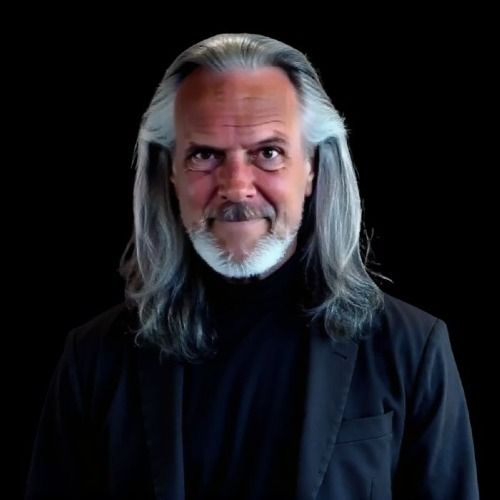
Redefining Normal: The Superhuman Potential Within Us All - Heidi Popp - Part 1
Heidi Popp, a solution-based way shower from Los Angeles, is the focal point of our discourse. A lifelong experiencer of the paranormal, she has dedicated decades to the study and engagement within disclosure communities. Transitioning from a successful career in the motion picture industry, where she spent thirty years, Heidi now devotes herself to the education of children, emphasizing the normalization of the paranormal and fostering creativity through child-led learning. This episode elucidates her journey from the film set to her current role as a lead educator, revealing her mission to guide and protect future generations. Through her experiences and insights, we shall explore the evolving landscape of education and the potential for all humans to embrace their inherent abilities, thus transforming the notion of what it means to be superhuman. Heidi Popp stands as a beacon of enlightenment in the realms of paranormal exploration and educational reform. Residing in Los Angeles, she is a solution-based way shower whose journey began with childhood experiences of the paranormal. Her profound engagement with various disclosure communities over several decades has equipped her with a wealth of knowledge and insights that she passionately shares. With an impressive thirty-year tenure in the motion picture industry, Heidi has transitioned from behind the scenes to nurturing the next generation as a lead educator at a learning enrichment center for homeschoolers. This pivotal shift reflects her commitment to creating a positive impact on the lives of young individuals, guiding them toward self-discovery and empowerment. In a candid conversation with the host, Heidi delves into the dichotomy of superhumans versus normal humans, challenging the conventional notions surrounding these classifications. She articulates the belief that the characteristics often deemed as 'superhuman' are, in reality, latent abilities within every individual. This perspective invites listeners to explore their own potential and the societal influences that shape their understanding of self. The dialogue further emphasizes the importance of personal experience and authenticity in unlocking one’s true capabilities. As Heidi shares her journey of service to others, she underscores the significance of fostering environments that nurture creativity and individual expression. As the discussion unfolds, Heidi reflects on the current state of education, advocating for a transformative approach that prioritizes child-led learning. Her insights resonate deeply within the context of societal structures that often stifle creativity and autonomy in traditional educational settings. The episode serves as a poignant reminder of the urgent need for reform that embraces diversity and individuality in learning, empowering the youth to thrive in a rapidly evolving world. Through Heidi's narrative, listeners are inspired to reimagine their educational experiences and to advocate for a future that celebrates the vast potential within each child.
Takeaways:
- Heidi Popp's extensive background in the entertainment industry reflects her multifaceted approach to life and education.
- The transition from a successful motion picture career to education underscores the importance of aligning one's profession with personal values.
- The podcast emphasizes the significance of child-led learning in fostering creativity and individual potential among children.
- The discussion highlights the need for a paradigm shift in education to better accommodate the unique needs of each child.
- Heidi's mission to protect and guide youth illustrates her commitment to nurturing the next generation's potential.
- The conversation challenges conventional notions of intelligence and success, advocating for a broader understanding of human capability.
Transcript
Heidi Popp is a solution based way shower currently in the Los Angeles area.
Speaker A:She is a childhood experiencer of the paranormal who has studied and participated in the disclosure communities for decades.
Speaker A:Her passion for entertainment took her through 30 successful years in the motion picture industry.
Speaker A:Her career and successful small business allowed her to find the others within Hollywood.
Speaker A:Eventually she began hosting gatherings and workshops and events for fellow like minds.
Speaker B: As of March: Speaker A:Away from the film Set Life to focus on her children and to normalize the paranormal.
Speaker A:She currently is a lead educator at a learning enrichment center for homeschoolers in la.
Speaker A:Guiding our youth and protecting our future is Heidi's daily mission offline.
Speaker A:Still a fan of speaking to crowds, she can be found interviewing fellow waysharers and sharing high vibrational synapses on her podcasts and vlog.
Speaker A:Heidi's information can be found in the description box below.
Speaker B:Well, welcome to the Nexus, Heidi.
Speaker B:How are you?
Speaker C:I'm very well, thank you for having me.
Speaker C:Thanks for having me.
Speaker B:I've been wanting to have you on for a long time and it's because of the number of conversations that we've been engaged with and whether interactively on your show or on somebody else's shows and in the group gab known as the Geezer geeks, of which you are a geezer geek gal.
Speaker B:And we have had a number of very synchronistic and I think beautifulness of the vibe of how we just kind of, kind of tune into the same things which is based on frequencies and vibration and energy.
Speaker B:Yes, right.
Speaker C:Yes, yes.
Speaker B:And a lot of stories going around in various fields from the ufology to the paraphology to the who knows what eieio foology and there's just a lot of air being sucked out of the oxygen being sucked out of the air, the conversations with all these things.
Speaker B:And I for one feel and I think you are of the same, same perspective.
Speaker B:You gotta get down to the personal experience.
Speaker B:You gotta get down to the actual evidence that you have of your personal experience for yourself and does that translate to the experience and the relationships and the vibe that you share with others.
Speaker B:And I think you are one of the most authentic expressions of that that I know.
Speaker C:Thank you.
Speaker C:Thank you for that.
Speaker C:That means a lot because that's what I'm trying to put out there.
Speaker C:You know, it doesn't matter about the growth or the likes.
Speaker C:In a way it's like I'm still walking the walk, talking the talk and out there in the 3D doing what I say.
Speaker C:I'm Doing.
Speaker C:Not just talking about wanting to do it.
Speaker C:I'm doing it.
Speaker B:Well.
Speaker B:And I think that's where the focus of our conversation today is on this concept of superhumans versus normal humans.
Speaker B:And I am one of the thought that the distinction between the two have been kind of used, abused, maybe even hijacked, because the majority of what I see is what people classify as superhuman is actually the latent inherent nature, habit and characteristics of our consciousness.
Speaker B:And some people have, you know, a much more intense, acute expression of that than others.
Speaker B:You can liken it to an athlete in a particular sport.
Speaker B:I mean, I'm 510 on a good day.
Speaker B:But I am not getting out there with LeBron James.
Speaker B:It's just not going to happen.
Speaker B:The frequency and vibration of his expression is just way beyond what mine is in that particular skill set.
Speaker C:In that particular skill set.
Speaker C:But you'd run hoops around him with a lot of other things.
Speaker C:I worked with him and yeah, not to my taste.
Speaker B:Well.
Speaker B:And that's a whole other rabbit hole.
Speaker C:We could go down.
Speaker C:But another tangent.
Speaker B:I'm just using it as an analogy, as a compare and contrast, of course.
Speaker B:And I think, you know, from what I know of what you're doing, you left one previous iteration of life and trans and transitioned into another.
Speaker C:Yes.
Speaker B:Can you give a brief description of you went from here and now you're here?
Speaker C:Yes.
Speaker C:And I think the first term, I guess all of it would be being of service to others.
Speaker C:But I was in motion picture for quite a long time.
Speaker C:I was in front of the camera, and then I was behind the camera.
Speaker C:And for the last 15 years, it was behind, but I was in constant service to others.
Speaker C:I was a union crew girl, but I was basically like the snack girl on set.
Speaker C:So I was taking care of everybody.
Speaker C:And it was a lot of it was very drainy.
Speaker C:It was very taxing.
Speaker C:It was very laborious.
Speaker C:It's very fit.
Speaker C:But I loved it.
Speaker C:I loved it.
Speaker C: ow, when the world flipped on: Speaker C:I saw how imbalanced it was.
Speaker C:And I also saw my two children who I'm a mother.
Speaker C:I was like, oh, there they are.
Speaker C:You know, I just kept putting them in this great school, like, okay, they're taken care of.
Speaker C:But it's now want I'm going to take care of him.
Speaker C:I'm going to become the primary caregiver here.
Speaker C:And so that's how I flipped my world.
Speaker C:And really, because of the giant, because he did help oversee the house and became head of household.
Speaker C:And I could take that downtime to become their primary caregiver and then focus on their educational journey.
Speaker C:As the world was changing.
Speaker C:Even the safe space I put them in, I just didn't adhere to how they were reopening.
Speaker C:Let's say that it was just, I was like, well, this isn't in alignment with what I thought they stood for.
Speaker C:So I realized I have to, we have to create something new here.
Speaker C:And so I went into the education of children.
Speaker C:Now it is like 25 or maybe even 30 years after the fact.
Speaker C:I did go to university for early childhood education to become a teacher.
Speaker C:You know, I did have, there was a background of academia there.
Speaker C:However, what I saw, what was happening in the school systems in the late 90s, I just backed out and went right into motion picture.
Speaker C:I was not there to defend the children or protect them.
Speaker C:And what I'm speaking of is, you know, when the medical mafia came in, let's say that, you know, I just, I was like, well, this isn't child led learning that I was hoping for because I was very much raised like that.
Speaker C:I had a mother that really, she helped me develop my imagination, my creativity.
Speaker C:I had a lot of child led childhood.
Speaker C:It was really for the betterment of me.
Speaker C:And it was a very, you know, inspiring childhood.
Speaker C:And I thought that would be really neat to inspire a lot of kids at once.
Speaker C:And then I realized the control that either state run schools or the academic agendas that were out there, I was like, well that, no, that's not what I thought it was.
Speaker C:And I was already kind of making some waves in motion picture.
Speaker C:So I'm like, I'll just go over here.
Speaker C:And so when everything changed just four years ago, I was like, well, I got to go with what resonates and what feels right.
Speaker C:And I just focused.
Speaker C:I put all my chips in on the education for my kids.
Speaker C:And that's when I said, well, I'm definitely not going back to the old systems.
Speaker C:A I'm lawfully not allowed to because of all these things that happen in California regarding mandates and medical choice.
Speaker C:So I'm like, let's create.
Speaker C:And as I was creating, it was pretty overwhelming.
Speaker C:But you said to go short.
Speaker C:But I'm saying more things.
Speaker B:No, you're good, you're good.
Speaker B:This is all good.
Speaker C:Well, as I was creating I realized this is overwhelming.
Speaker C:So I had other people educate them, but I'm wanting to bring in, you know, qigong and meditation, try to bring in the woo a Little bit.
Speaker C:And I'm like, I just wish there was a place like this.
Speaker C:Well, it turns out because I shifted my focus, my social circle shifted as well.
Speaker C:And I started finding other families and parents who felt the same way I did.
Speaker C:And that's when it was like the speakeasies came out of the hangouts and who's going where and who's doing what.
Speaker C:And I found this beautiful learning enrichment center that stayed open and really is a child led learning educational journey for children.
Speaker C:And I just aligned with it right away.
Speaker C:I got my children enrolled and put them there for a year while I took a step back and began podcasting some more and did things like, like that.
Speaker C:But then I'm like, I got to get in there.
Speaker C:I want to help.
Speaker C:So it was like, put me in coach.
Speaker C:So I started being an assistant and then within a year I was given my own classroom.
Speaker C:So now I'm about to start my second year with my own class.
Speaker C:And it's the same kids I had last year.
Speaker C:We grow together.
Speaker C:So academically you grow with the child, which I just, I'm a huge fan of, big proponent of.
Speaker C:And it's a bunch of homes.
Speaker B:Isn't it similar to what you were saying about your childhood?
Speaker B:Yes, you have that consistent, right?
Speaker C:Yep, yep.
Speaker C:That grew with me, that adapted with me, that let me expand when it was safe and when I felt ready to expand.
Speaker C:And so I feel I'm more of a mentor guardian now in that sense.
Speaker C:And my children are thriving there.
Speaker C:You know, as with any business, there's, you know, that can go toe to toe with so many things that, you know, I'd love to help do more there as far as a business standpoint.
Speaker C:But I see that it's a perfect, either stepping stone or it's, it's, it's progress.
Speaker C:Like it's something, it's happening.
Speaker C:There's a creation happening that I'm really excited about and it could be taken in different levels to different ways and all over.
Speaker C:And I think it is, you know, because I've been speaking more online.
Speaker C:I'm meeting people who like on the east coast, they're, they have a similar sort of learning center.
Speaker C:And um, Florida, Texas, you know, all these states are doing, starting to branch off and do something different in that sense.
Speaker C:And that's having a child led learning facility.
Speaker C:It's really under the homeschool umbrella.
Speaker C:So they really don't have state mandates on them.
Speaker C:There's a lot more freedom.
Speaker C:They do believe in sovereign civilians of free will and.
Speaker C:But what I'M finding in this particular place, which is in Los Angeles, you know, you bring all walks of life.
Speaker C:But I am starting to interact too with those with innate psychic abilities.
Speaker C:And you know, I'm starting to run into some of those children.
Speaker C:But I'm also noticing, you know, which I know we'll talk in length about.
Speaker C:But to me, all children, all humans have the ability to become superhuman.
Speaker C:So I'm sure we'll tap into it more.
Speaker C:But that was my bridge, you know, motion picture into teaching.
Speaker C:There you go.
Speaker B:So the, the curriculum at the learning center you're at is, I think you've mentioned before, it's kind of a Rudolph Steiner Waldorf kind of model.
Speaker C:Yes, it's a model after Steiner for sure.
Speaker C:It's, it's not like a fully accredited Waldorf brick and mortar school, but the staff, you know, the admin, we do admire Steiner's philosophy.
Speaker C:He did believe in child led learning, education and the mind, body will of the child.
Speaker C:And it's really maintaining and amplifying the soul of the child.
Speaker C:And that just resonated huge with me.
Speaker C:I was like, okay, this is, this is the woo too.
Speaker C:Without, you know, really knowing it's the woo.
Speaker C:And everything I, what I love too, it's very developmentally appropriate in age because all the old systems are very rushed.
Speaker C:You're, you're rushing, you're, you're dumbing down, you're numbing, you're, you're conforming, you're putting them in boxes.
Speaker C:Whereas this is the slow bloom.
Speaker C:And you know, you can't deny the results.
Speaker B:I'll just say that, well, oh God, there's so many.
Speaker B:You just dropped a couple of nuggets on there.
Speaker B:And now I'm going to go look for a particular piece which I think speaks directly to what you're saying about the way in which education has been kind of hijacked.
Speaker C:Yes.
Speaker B:And that's really one of the things that is created.
Speaker B:This contributed at a minimum and maybe been a major catalyst to this delineation of super versus normal human.
Speaker C:Absolutely big part of it.
Speaker B:There's been a repackaging of our little carbon based units that we are creating and trying to, in the old view, create free labor.
Speaker C:That's it.
Speaker C:Work for the man, you know.
Speaker C:Yeah, conform and fall in line.
Speaker C:And that's old school.
Speaker C:This is Rockefeller, this is, you know, Rothschild.
Speaker C:This is old school.
Speaker C:He all those rabbit holes.
Speaker C:But yeah.
Speaker C:And then when I saw him in the medical came in and I was, and seen lights get turned off and I was just Dumbfounded, I go, whoa, where are we going here?
Speaker C:But having not have any children of my own, I was in my 20s, you know, it was kind of all about me.
Speaker C:I'm like, I'll just go over here then.
Speaker C:That doesn't look appealing anymore.
Speaker C:Now I'm just like dug my heels in, you know, especially when my children were born and I saw the human interference on their spirit, on their soul, that was happening.
Speaker C:And it was so like I was out of the norm for wanting to protect their spirit.
Speaker C:And I'm like, well, this is really backwards.
Speaker C:So I really started digging my heels in just to protect them even more.
Speaker C:And I'm like, we have a big problem here.
Speaker C:And I'm like, oh, this has been a slow drip of an involvement, you know, underneath, you know, behind the shadows, you know, people weren't noticing all this creeping and now there's such a stronghold that I feel like, yes, those systems have to collapse.
Speaker C:But more than anything, we just have to start to stop participating and walk away.
Speaker C:And because as long as there's going to be someone that believes that old model is the way to do things, then it's going to continue to exist.
Speaker C:So we have to take it on over there.
Speaker B:Yeah, to me, this is, you know, we've heard a number of, we've talked about, you mentioned that, you know, since the scamdemic popped out.
Speaker B:To me it was, that was clearly orchestrated, planned, and it was, it was a great.
Speaker B:I give them an A plus on effort, on packaging because there's nothing more motivating to humans than a silent, deadly killer.
Speaker B:So the fear factor is like, you know, bring it on.
Speaker B:So they did great there, but they've just stumbled at one after another of the execution and the follow up.
Speaker B:And now here we are four plus years later, I guess, and we're looking at all the data and going, okay, you clearly can't hide the bullshit that you just put everybody through it.
Speaker C:Yes, yes.
Speaker C:And I think there's a, because there's a huge population that's really quiet right now.
Speaker C:And because of the choices they made and the segregation they were putting everybody through.
Speaker C:But then there's people such as myself who got a little more empowered going, wow, not only did I not bow down, but as a parent, I showed my children what standing up for yourself means and how to do it with grace and, and, you know, dignity and to.
Speaker C:Not really.
Speaker C:I started to cause a scene, I started to march, I started to do those things and I got a little sicker and I'm like, we have to just create creator beings.
Speaker C:We have to create something new.
Speaker C:So watching us go through that whole movement and to find out where we came out at the end, now we're just standing there welcoming these waves of people going, I think I made a mistake.
Speaker C:I got you.
Speaker B:Have you run into anybody yet that didn't take the jab and is remorseful that they didn't?
Speaker C:Absolutely not.
Speaker C:Quite the opposite, right?
Speaker C:Quite the opposite.
Speaker B:So I went through that same thing as soon as it came out.
Speaker B:In fact, the last show that I did on the previous iteration of the Nexus was December.
Speaker B: ew Year's Eve or Christmas of: Speaker B:So it was just before this shit was about to roll out.
Speaker B:And the title of the show was the Knowledge Apocalypse.
Speaker B:The end of the curated narrative.
Speaker B:Because my observation of pattern recognition and trends analysis pointed that, you know, over the last two and a half decades, I've been deep into exploring Woo.
Speaker B: ner in Southern California in: Speaker B:And shiatsu is Japanese for acupressure.
Speaker C:Yes.
Speaker C:It's my favorite.
Speaker B:Me and needles, we're not compatible at all.
Speaker B:But using the same meridians and the same points, you can still achieve some amazing effects.
Speaker B:So that was my burst away from the allopathic model because I realized that all of that was.
Speaker B:Just had way too many holes in it.
Speaker C:Yep.
Speaker C:It's just money.
Speaker B:Yeah.
Speaker B:I mean, follow the money pox.
Speaker B:Remember the K is silent and the monkey pox, right?
Speaker C:Yeah.
Speaker C:Yeah, that's a good one.
Speaker B:So when this is my observation and what I was doing in my trend analysis made me do this show saying basically everything we've been told is about to be revealed as being bullshit.
Speaker B:And that's across everything.
Speaker B:It's not all industry, medicine, it's education.
Speaker B:It's the academia institutions, the financial institutions, the governance and administrative institutions.
Speaker B:It's all broke.
Speaker B:So we started to hear the people talking about the great reveal, the great rethink, the great Reset.
Speaker B:To me.
Speaker B:And this is one of the reasons I wanted to have this conversation with you.
Speaker B:You and I are working on what I think is about to happen, which is the great reimagining.
Speaker C:Ooh, I like that name.
Speaker C:It's my next tattoo.
Speaker B:Yes.
Speaker C:That's what it.
Speaker C:Yeah.
Speaker C:The creation of the.
Speaker B:Because we now have the opportunity through these.
Speaker B:All these experiences, all this knowledge.
Speaker B:I mean, when they unleashed the net of knowledge back in the 90s and I was right in the middle of that.
Speaker B:I don't think that they, that they, whoever they are, thought that it would get away from them, but it did.
Speaker C:Yes, yes, that's true.
Speaker B:And with the releasing of the beast of knowledge to the wild people like you and me and all the folks that we talk to online in our shows and just our shorts, right, we're all looking at it going, yeah, there's dumpster fires everywhere, there's train wrecks everywhere, there are lunatics everywhere, the masses of the mental and mobs.
Speaker B:Well, it's on display right now in Chicago, as a matter of fact, without getting into that realm, but just as a general observation.
Speaker B:So I think what's happened in a lot of ways, and I believe in this basic model of philosophy, ontology, is that we are here because we chose to be here.
Speaker B:And we chose to be here and now to be a part of not only the great reveal, which is the fact that everything is bullshit, and then transform that into the great reimagining.
Speaker B:So what would it be if we were dealing with just the facts, not somebody's truth, which is basically a fact that somebody's wrapped their shit around.
Speaker C:Yes, that's the authentic.
Speaker C:Yes, yes, I know.
Speaker C:I like.
Speaker C:Which tangent do I go on this one?
Speaker B:I could see two of them trigger go with pick one and go.
Speaker C:I know, I'm like, well, as much as you were saying, I remember 90s and I remember the web coming out.
Speaker C:I'm Oregon Trail girl.
Speaker C:But, you know, the information war that's out there, you're getting.
Speaker C:We've.
Speaker C:We've quadrupled even more than that.
Speaker C: tually had the opportunity in: Speaker C:They're like, oh, they're finding out things and then more junk gets thrown in.
Speaker C:But this is where I get excited, where, you know, I'm not surprised you dappled in the woo and studied Eastern medicine, all that.
Speaker C:We're.
Speaker C:We've been taking care of our meat suits and lining up enough that we can discern the bullshit as well as.
Speaker C:And that comes with the information we come across and the people we meet.
Speaker C:And these communities are flooded with the charlatans right now who just have stories or storyteller and not a lot of sauce to.
Speaker C:To back it up.
Speaker C: asn't that the whole thing in: Speaker C:Like, where's the sauce?
Speaker C:Where's the proof?
Speaker C:Where's the proof?
Speaker C:And here come all these Proofs and these drops and things.
Speaker C:But show me more, show me more.
Speaker C:And then you realize, doesn't matter what I show you, someone is not going to be able to dissect or discern or whatever.
Speaker C:So I honestly, it comes to a point where you're watching this war of information go on.
Speaker C:You're like, ah, you guys fight over there and chew on the fat.
Speaker C:I'm gonna build over here and create.
Speaker C:Because, you know, after a while they're just swirling in this information like circle jerk of egos.
Speaker C:And.
Speaker B:I call it a tsunami of shit of mental gymnastics and fornication.
Speaker C:I like that one.
Speaker C:What's the acronym?
Speaker C:There's some merch.
Speaker C:Yeah.
Speaker C:And it's like, it's exhaust.
Speaker C:Because then even online it's like, insert a ping and insert a pay insert.
Speaker C:I'm like, well, but who's.
Speaker C:Who closes the laptop and goes out and does something about it?
Speaker C:Who takes their stories and their experience and then goes out, goes, well, I'm going to change, flip it, I'm going to flip it.
Speaker C:Light out there in the world, no matter what the people around me are thinking and feeling, I'm just going to go do.
Speaker C:And that's where you get.
Speaker C:This percentage gets really small.
Speaker C:And the last few years the world has allowed us to see that.
Speaker C:You know, if you're tuned in, I guess you can really find who is doing the work and who's just talking.
Speaker C:Who's a talking head, another talking head.
Speaker C:And then it goes, well, who's an infiltrated talking head?
Speaker C:Who's an Alphabet agency talking head?
Speaker C:Like it's, it just keeps going and going and then you're just.
Speaker C:I just go click.
Speaker C:And I close the laptop and I go focus on the kids.
Speaker C:It's.
Speaker C:Yeah, that one.
Speaker C:There's a couple tangents there, but I see what you're saying especially resonate with, you know, everyone taking the time and having an opportunity to research for themselves.
Speaker C:And then even that got overwhelming and taken over.
Speaker C:And well, I found this information and your information is wrong because I got this information.
Speaker C:All I know is if you have a belief system, no matter what it is, you could think cockroaches or kings and queens in royalty or something.
Speaker C:You're going to find that information online now.
Speaker C:So it's kind of like you have to back your stuff up with human experience, with insight, with.
Speaker C:With your own truths and not care what other people think, but also pay attention to who can't back their stuff up.
Speaker B:Yeah, well, you, at the end of the day, it's all speculation.
Speaker B:Nobody has any kind of fact other than what they have in their own personal experience.
Speaker B:And then how they can express that in a way that is either demonstrable at a minimum, has some kind of credibility.
Speaker B:And one of the.
Speaker B:There was a couple of things that I.
Speaker B:When I watched the whole shutdown thing, I'm sitting back going, okay, you guys are really going for the low mother load here.
Speaker B:Let's see how this works.
Speaker B:So a couple of months into it, I was just outside of Durango, and I said, well, they're saying, don't go anywhere.
Speaker B:Don't go do anything.
Speaker B:You know, stay in your room until we tell you it's okay to come out.
Speaker C:Yeah.
Speaker B:You know, get in there and do some navel gazing.
Speaker B:You know, call.
Speaker C:Tattle on your neighbors.
Speaker C:Tattle on your neighbors if they have more than five people.
Speaker C:Yeah.
Speaker C:Yeah.
Speaker B:So I went to downtown Durango, and I was like.
Speaker B:I looked around and I thought, wow, I've never seen it this clean, aside from not being, you know, full of people.
Speaker B:But, you know, everybody got all paranoid about you got to wipe and spray everything down and wash it down and pressure wash this and shovel that and sweep this.
Speaker B:And it was like, wow, I don't think this town has been this clean since they probably made it.
Speaker C:It's like, finally someone cleaned it up.
Speaker B:And so I thought, well, there's a benefit to what's going on.
Speaker C:Positive.
Speaker B:And another benefit was, you know, because of the nature of this silent, deadly killer being basically focused around hygiene, people started that hadn't ever and probably needed to relook at hygiene, and they started to clean themselves up a little bit.
Speaker C:True.
Speaker B:Right.
Speaker B:Started to be a little bit more conscious about, you know, keeping.
Speaker B:You got to keep stuff clean because this thing's silent, it's invisible, and it could be anywhere.
Speaker D:Yeah.
Speaker C:Yeah.
Speaker B:But these plastic.
Speaker B:These plexiglass.
Speaker B:Oh, separators, will.
Speaker B:And don't forget to put something on your face and breathe all of the crap that you're supposed to be exhaling for a reason.
Speaker B:I mean, just the illogic of that just was phenomenally amazing to me.
Speaker C:Yeah.
Speaker C:We were living in a SNL skit.
Speaker B:Right.
Speaker B:And now.
Speaker B:And now you still have.
Speaker B:There's a few that are out there in the wild that are still wearing them.
Speaker C:Yep.
Speaker B:And they're even wearing them while they're driving in a car by themselves.
Speaker C:Yeah.
Speaker C:With the windows roll.
Speaker B:And all that tells me is that there's some mental illness going on.
Speaker C:Yes.
Speaker B:That is the result of decades of programming.
Speaker C:Yep.
Speaker B:You know, the whole concept of MK Ultra and the Mockingbird Project.
Speaker B:Project Mockingbird.
Speaker B:I mean, which.
Speaker B:We just did a show with the geezers where it was Polly Wanna Cracker and it was about the media.
Speaker B:It's not legacy media, it's not lamestream media or mainstream media.
Speaker B:It's Mockingbird media because all they do is repeat the same shit.
Speaker B:And it's amazing how people don't pay attention to this tsunami of shit that's coming in as a data deluge.
Speaker B:And none of the education that any of us have gone through, none of the mentorships, I think mentors.
Speaker B:I know in my life, I had some awesome dudes that knocked me upside the noggin and went, dude, watch this and you'll learn.
Speaker B:I went, oh, thank you very much for pointing that out.
Speaker B:So mentors are really important, but the system has been so corrupt for so long it's been hijacked, that it has created people that no longer know how to think.
Speaker B:They only know what to think.
Speaker C:Yep.
Speaker C:Yep.
Speaker C:It was created that it was intended that way, right?
Speaker C:Yeah.
Speaker B:And to that I want to play this short piece by Sir Ken Robinson.
Speaker D:Every country on Earth at the moment is reforming public education.
Speaker D:There are two reasons for it.
Speaker D:The first of them is economic.
Speaker D:People are trying to work out, how do we educate our children to take their place in the economies of the 21st century.
Speaker D:How do we do that, given that we can't anticipate what the economy will look like at the end of next week, as the recent turmoil is demonstrating, how do we do that?
Speaker D:The second, though, is cultural.
Speaker D:Every country on Earth is trying to figure out, how do we educate our children so they have a sense of cultural identity and so that we can pass on the cultural genes of our communities while being part of the process of globalization.
Speaker D:How do you square that circle?
Speaker D:The problem is they're trying to meet the future by doing what they did in the past.
Speaker D:And on the way, they're alienating millions of kids who don't see any purpose in going to school.
Speaker D:When we went to school, we were kept there with a story which is, if you worked hard and did well and got a college degree, you would have a job.
Speaker D:Our kids don't believe that, and they're right not to, by the way.
Speaker D:You're better having a degree than not.
Speaker D:But it's not a guarantee anymore, and particularly not if the route to it marginizes most of the things that you think are important about yourself.
Speaker D:Some people say we have to raise standards.
Speaker D:If this is a breakthrough, you know.
Speaker D:Really?
Speaker D:Yes.
Speaker D:We should why would you lower them?
Speaker D:You know, I haven't come across an argument that persuades me of lowering them, but raising them.
Speaker D:Of course we should raise them.
Speaker D:The problem is that the current system of education was designed and conceived and structured for a different age.
Speaker D:It was conceived in the intellectual culture of the Enlightenment and in the economic circumstances of the Industrial Revolution.
Speaker D:Before the middle of the 19th century, there were no systems of public education, not really.
Speaker D:I mean, you could get educated by Jesuits, you know, if you had the money.
Speaker D:But public education paid for from taxation, compulsory to everybody and free at the point of delivery.
Speaker D:That was a revolutionary idea and many people objected to it.
Speaker D:They said it's not possible for many street kids, working class children, to benefit from public education.
Speaker D:They're incapable of learning to read and write, and why are we spending time on this?
Speaker D:So there's also built into it a whole series of assumptions about social structure and capacity.
Speaker D:It was driven by an economic imperative of the time, but running right through it was an intellectual model of the mind, which was essentially the Enlightenment view of intelligence, that real intelligence consists in the capacity of a certain type of deductive reasoning and a knowledge of the classics.
Speaker D:Originally, what we come to think of as academic ability, and this is deep in the gene pool of public education, that there are really two types of people, academic and non academic, smart people and non smart people.
Speaker D:And the consequence of that is that many brilliant people think they're not because they've been judged against this particular view of the mind.
Speaker D:So we have twin pillars, economic and intellectual.
Speaker D:And my view is that this model has caused chaos in many people's lives.
Speaker D:It's been great for some.
Speaker D:There have been people who benefited wonderfully from it, but most people have not.
Speaker D:Instead, they suffer.
Speaker D:This.
Speaker D:This is the modern epidemic and it's as misplaced and it's as fictitious.
Speaker D:This is the plague of adhd.
Speaker D:Now, this is a map of the instance of ADHD America or Prescription for adhd.
Speaker D:Don't mistake me.
Speaker D:I don't mean to say there is no such thing as attention deficit disorder.
Speaker D:I'm not qualified to say if there is such a thing.
Speaker D:I know that a great majority of psychologists and children and pediatricians think there is such a thing, but it's still a matter of debate.
Speaker D:What I do know for a fact is it's not an epidemic.
Speaker D:These kids are being medicated as routinely as we had our tonsils taken out.
Speaker D:And on the same whimsical basis, and for the same reason, medical fashion, our children are living in the most intensely stimulating Period in the history of the earth.
Speaker D:They're being besieged with information and calls for their attention from every platform.
Speaker D:Computers from iPhones, from advertising audience from hundreds of television channels.
Speaker D:And we're penalizing them now for getting distracted from what?
Speaker D:Boring stuff at school.
Speaker D:For the most part.
Speaker D:It seems to me it's not a coincidence totally that the instance of ADHD has risen in parallel with the growth of standardised testing.
Speaker D:These kids are being given Ritalin and Adderall and all manner of things, often quite dangerous drugs to get them focused and calm them down.
Speaker D:But according to this attention deficit order increases as you travel east across the country, people start losing interest in Oklahoma, They can hardly think straight in Arkansas.
Speaker D:And by the time they get to washing, they've lost it completely.
Speaker D:And there are separate reasons for that.
Speaker D:I believe it's a fictitious epidemic, if you think of it.
Speaker D:The arts, and I don't say this exclusively the arts, I think it's also true of science and of maths.
Speaker D:But let me.
Speaker D:I say about the art particularly, because they are the victims of this mentality currently, Particularly the arts especially address the idea of aesthetic experience.
Speaker D:An aesthetic experience is one in which your senses are operating at their peak when you're present in the current moment, when you're resonating with the excitement of this thing that you're experiencing when you are fully alive.
Speaker D:An anesthetic is when you shut your senses off and deaden yourself to what's happening.
Speaker D:And a lot of these drugs are that we're getting our children through education by anesthetizing them.
Speaker D:And I think we should be doing the exact opposite.
Speaker D:We shouldn't be putting them asleep, we should be waking them up to what they have inside of themselves.
Speaker D:But the model we have is this.
Speaker D:I believe we have a system of education that is modeled on the interests of industrialism and in the image of it, I'll give you a couple of examples.
Speaker D:Schools are still pretty much organized on factory lines, ringing bells, separate facilities specialized into separate subjects.
Speaker D:We still educate children by batches.
Speaker D:You know, we put them through the system by age group.
Speaker D:Why do we do that?
Speaker D:Why is there this assumption that the most important thing kids have in common is how old they are?
Speaker D:You know, it's like the most important thing about them is their date of manufacture.
Speaker D:Well, I know kids who are much better than other kids at the same age in different disciplines or at different times of the day, or better in smaller groups than in large groups, or sometimes they want to be on their own.
Speaker D:If you're interested in the model of learning.
Speaker D:You don't start from this production line mentality.
Speaker D:It's essentially about conformity.
Speaker D:And increasingly it's about that.
Speaker D:As you look at the growth of standardized testing and standardized curricula and it's about standardization, I believe we've got to go in the exact opposite direction.
Speaker D:That's what I mean about changing the paradigm.
Speaker D:There was a great study done recently of divergent thinking published a couple of years ago.
Speaker D:Divergent thinking isn't the same thing as creativity.
Speaker D:I define creativity as the process of having original ideas that have value.
Speaker D:Divergent thinking isn't a synonym, but it's an essential capacity for creativity.
Speaker D:It's the ability to see lots of possible answers to a question, lots of possible ways of interpreting a question, to think what Edward de Bono would probably call laterally to think, not just in Libya, or convergent ways to see multiple answers, not one.
Speaker D:So, I mean, there are tests for this.
Speaker D:I mean, one kind of COD example would be people might be asked to say, how many uses can you think of for a paperclip?
Speaker D:One of those routine questions.
Speaker D:Most people might come up with 10 or 15.
Speaker D:People who are good at this might come up with 200.
Speaker D:And they do that by saying, well, could the paperclip be 200 foot tall and be made out of foam rubber?
Speaker D:You know, like, does it have to be a paperclip as we know it, Jim?
Speaker D:You know, now, the test was.
Speaker D: And they gave them to: Speaker D:This is in a book called Breakpoint and Beyond.
Speaker D:And on the protocol of the test, if you scored above a certain level, you'd be considered to be a genius at divergent thinking.
Speaker D: e of the people tested of the: Speaker D:Now, you need to know one more thing about them.
Speaker D:These were kindergarten children.
Speaker D:So what do you think?
Speaker D:What percentage at genius level?
Speaker D:80.
Speaker D:80.
Speaker D:80.
Speaker D:Okay, 98%.
Speaker D:Now, the thing about this was it was a longitudinal study.
Speaker D:So they retested the same children five years later, age of eight to 10.
Speaker D:What do you think?
Speaker D:50.
Speaker D:They retested them again five years later, ages 13 to 15.
Speaker D:You can see a trend here, can't you?
Speaker D:Now, this tells an interesting story because you could have imagined it going the other way, couldn't you?
Speaker D:You start off not being very good, but you get better as you get older.
Speaker D:But this shows two things.
Speaker D:One is we all have this capacity, and two, it mostly deteriorates.
Speaker D:Now, a lot of things have happened to these kids as they've Grown up a lot.
Speaker D:But one of the most important things happened, and I'm convinced is that by now they've become educated.
Speaker D:They've spent 10 years at school being told there's one answer, it's at the back, and don't look and don't copy because that's cheating outside schools.
Speaker D:That's called collaboration inside schools.
Speaker D:Now this isn't because teachers want it this way, it's just because it happens that way.
Speaker D:It's because it's in the gene pool of education.
Speaker D:We have to think differently about human capacity.
Speaker D:We have to get over this old conception of academic, non academic, abstract, theoretical, vocational, and see it for what it is, a myth.
Speaker D:Secondly, we have to recognize that most great learning happens in groups, that collaboration is the stuff of growth.
Speaker D:If we atomize people and separate them and judge them separately, we form a kind of disjunction between them and their natural learning environment.
Speaker D:And thirdly, it's crucially about the culture of our institutions, the habits of the institution and the habitats that they occupy.
Speaker C:I. I need to, I need to blast that.
Speaker C:That was absolutely amazing what he said.
Speaker B:That was.
Speaker C:Yeah, ditto.
Speaker B:That was some of the most concise, precise and inclusive description of what is and why and what its problems are that I've seen, period.
Speaker C:So well done.
Speaker C:And even the visual, someone like me, because I, I learned differently than others.
Speaker C:I like the visual and that was fantastic.
Speaker C:That should be required viewing for parents with school age children because they have choices.
Speaker C:Everybody has a choice.
Speaker C:So.
Speaker B:Well, and I.
Speaker B:In some ways it might be kind of not necessarily age specific, but I think kids should see this.
Speaker C:Oh sure, sure.
Speaker C:Yeah, I'm going to show mine.
Speaker C:Absolutely.
Speaker C:That was so well done.
Speaker C:That was fantastic.
Speaker C:And that was all my little thoughts and talking points, by the way.
Speaker C:And I.
Speaker C:And of course, even though we just talked raw in the beginning, I immediately went to the medical and the interference, the human inter.
Speaker C:And.
Speaker C:And then showing what we are doing.
Speaker C:So it was.
Speaker C:That was my brain right there.
Speaker B:Well, now you know why I wanted to share that with me in this conversation.
Speaker C:Yes, absolutely.